

Why procurement trips up prototyping teams
Most teams hit the same walls: unclear specs, surprise costs, and prototype turnaround that blows the schedule. I’ve seen engineers lock designs for testing only to find the shop can’t hold the tolerance, or finish choices add days and dollars. Start by naming the problem and owning it—don’t leave the vendor guessing what “good enough” means. If you need a reliable point of contact, think beyond price and ask whether a precision parts manufacturer can explain the trade-offs up front.

Lock down the technical must-haves
Write a one-page spec that answers: critical dimensions and tolerances, materials and grades, heat treatment, surface finish and appearance, functional tests, assembly interfaces, and expected lifecycle. Attach CAD files, exploded views, and a short note on what will fail the part. Call out one or two truly critical dimensions as non-negotiable; everything else can be negotiable with clear impact statements.
Checklist for vendor capabilities
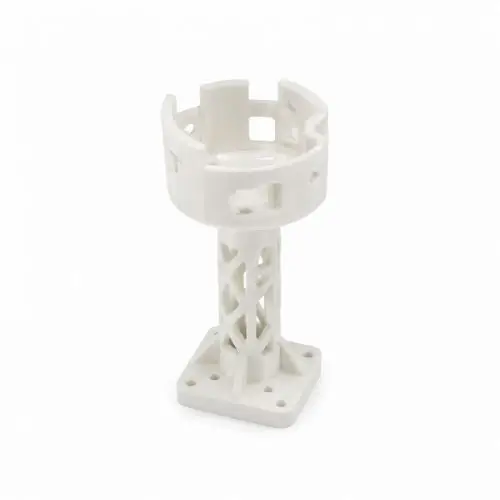
Ask whether the vendor: runs the specific machines (3- and 5-axis mills, Swiss-type, EDM), stocks the materials you specify, offers fixture design, and performs first-article inspection. Verify turnaround promises against shop load and ask for sample lead-times on similar work. Get references for parts that match your size and tolerance class; photos of past parts and measurement reports beat vague assurances.
Quotes: dissect them, don’t accept them
Compare line items: programming/setup, per-part machining, finishing, inspection, and tooling amortization. Request pricing for three scenarios—prototype single run, small batch (5–50), and scale run—so you see how unit cost changes. Clarify minimum order quantities and expedite fees. If a quote leaves out fixturing or inspection, assume it’s not included.
Quality control and acceptance rules
Define what “accept” means: full CMM report on critical datums, specific surface finish Ra values, hardness readings after heat treat, or visual acceptance criteria with photos. Require traceability for raw material and lot numbers when material properties matter. Set a rework policy and who pays for it ahead of the first run.
Common pitfalls and how to avoid them
Don’t skip mock assemblies—parts that look fine on a table can bind under load. Avoid vague finish descriptions like “smooth” or “anodize.” If you need a cosmetic face, mark it. Watch for tool access blind spots on multi-axis parts and specify break edges if sharp corners would interfere in assembly. Always confirm whether the shop will hold tolerance on internal bores when stacked with mating parts.
Real-world experience and where this matters
From shop-floor techs to procurement leads, practical experience matters more than slick brochures. Teams working out of Silicon Valley have learned to demand clear DFM feedback and realistic lead-times because product cycles move fast and failures are costly. Seek suppliers who can show measurement data and process control, and who understand prototype constraints—this is the kind of competency you get when you rely on proven prototype machining workflows rather than unverified promises.
Wrap-up: put the checklist to work
Make the checklist your contract companion: specs, vendor capabilities, itemized quotes, inspection criteria, and rework rules. With that structure, you cut surprises and get prototypes that actually validate designs. A pragmatic partner like Hanstar fits into that process by matching capabilities to the problems you’ve already defined and keeping the back-and-forth focused on what matters—real parts that behave like the final product.
