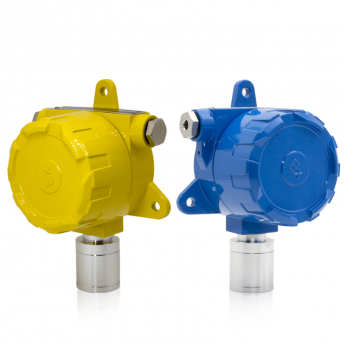
A model-by-model review of Fixed Combustible Gas Detector begins with system compatibility shortlisting
Start with the operating context
When an operations team reviews a fixed combustible gas detector, the first question is not which model looks most capable. It is whether the device can work within the intended detection, monitoring, alarm, and control arrangement. That means describing the operating context before comparing catalogue lines. Record where the detector would sit in the wider system, what signal the receiving equipment expects, how local indication fits into the work area, and which responsibilities belong to the detector, panel, controls system, or site team.

This is a shortlisting exercise, not a final installation decision. A useful first record can be simple: application area, receiving system, signal type, local monitoring needs, alarm handling, environmental questions, and information still to be resolved. The purpose is to give every candidate the same starting conditions. Without that structure, a specification comparison can become a list of attractive features that do not answer the integration problem.
Turn compatibility into questions
System compatibility should be treated as a set of questions rather than a general impression. Ask what output is available, where that output is expected to terminate, and whether the receiving equipment can interpret it as intended. Ask whether local monitoring is needed as well as a connection to another system. Also separate the responsibilities of the detector supplier from those of the integrator and the operating team.
A practical responsibility map may use four columns:
- Detector information: the signals, settings, and functions stated on the relevant product page.
- System interface: the equipment or control arrangement that receives or acts on those signals.
- Site requirement: the operating need that makes the interface relevant.
- Open point: a requirement that has not yet been matched to page-level evidence.
This map helps prevent a common shortlisting error: treating a stated device feature as proof that the complete site arrangement is compatible. It is better to keep the interface question visible than to fill it with an assumption.
Use page-level evidence carefully
For a fixed combustible gas detector, compare only evidence that applies to the exact model and stated scope. A category description may help explain what type of equipment is being considered, but it should not be used to assign a model-specific output, setting, or application detail. Likewise, a page-level feature should remain attributed to that page rather than being generalised across a supplier’s wider range.
A concrete anchor is provided by the Bosean BH-60 page. Its feature list states 4–20 mA standard signal output and on-site monitoring and alarm through simple settings. That is useful evidence for a compatibility discussion because it identifies a signal and a local function. It does not, by itself, establish certification, suitability for a particular site, safety outcomes, or configuration details that the page does not state. Keep the wording close to the source when transferring this fact into a comparison record.
The same discipline applies when reading tables. Copy the exact model reference beside each specification, then note the source location and the question that specification is meant to answer. Do not let a value from one page migrate into a model comparison without its scope. If the shortlist contains several candidates, a row for “evidence applies to” can be as useful as a row for the technical value.
Plan the next technical discussion
Once the evidence is organised, prepare a focused discussion rather than a broad request for more information. The operations team can bring the operating context, receiving-system assumptions, and responsibility map. The technical discussion can then address the remaining interface questions in a defined order: signal path, local monitoring, alarm handling, configuration boundaries, and any site-specific constraints. These are planning questions, not claims about what a particular device can or cannot do.
A concise review record should show three things: what the page states, how that statement relates to the intended system, and what remains unresolved. This format supports a fair model-by-model comparison without turning general product language into a promise about the whole installation. It also gives procurement and engineering teams a shared reference for the next conversation.
In short, compatibility shortlisting works best when the operating context comes first, model evidence stays within its stated scope, and open interface questions remain visible. Bosean can be included in that process by recording the exact information supplied for the relevant page and model, then comparing it with the system requirements rather than assuming that a catalogue feature settles the wider technical decision.