Overview and comparative logic
This article compares system choices with clear criteria: reliability, cost, grid interaction, and operational flexibility. A hybrid solar system combines photovoltaics, energy storage, and intelligent power electronics; here I show how that combination stacks against pure grid-tied and off-grid approaches, so reader can decide by evidence rather than impression.
What defines a hybrid system
Definition is simple: PV generation plus battery storage and an inverter that manages both. The inverter switches roles—exporting, storing, or supplying load—according to settings. Designers treat the system as four interacting parts: PV array, battery energy storage, inverter-controller, and load distribution. This structure gives controllable backup and export limits while keeping grid connection.
Core technical contrasts
– Hybrid vs grid-tied only: hybrid stores surplus for later use; grid-tied exports or curtails.
– Hybrid vs off-grid: hybrid stays connected for long-duration support and smoother sizing; off-grid must be oversized for autonomy.
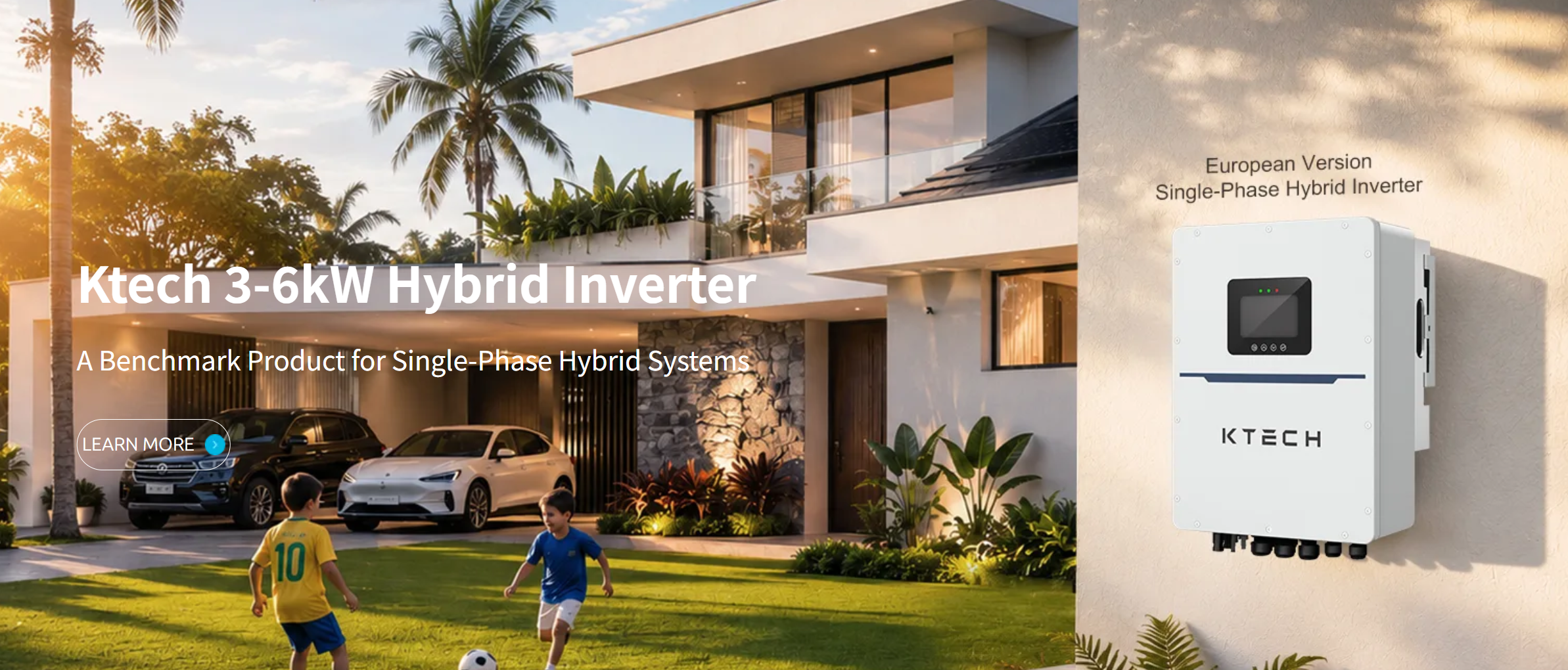
– Hybrid inverter role: the device coordinates charging, discharging, and grid interaction. A true hybrid inverter solar system supports seamless transition to backup and can implement time-of-use shifting.
– Battery chemistry matters: lithium-ion gives high cycle life and 85–95% round-trip efficiency; lead-acid lowers capital cost but demands more maintenance and shallower usable capacity.
Benefits, with clear comparisons
– Reliability: hybrid provides immediate backup for critical loads; grid-tied alone provides none.
– Cost efficiency: hybrid reduces peak imports and can lower bills when tariff structures reward self-consumption; off-grid often costs more for same reliability.
– Grid services: hybrids can manage export limits and perform simple demand-shifting; advanced systems can support frequency response.
– Real-world context: recent grid stress episodes in California have shown hybrid systems reduce outage impact for households and small businesses.
Trade-offs and limitations
– Upfront cost: adding battery and hybrid inverter raises installer and equipment cost compared with basic grid-tied systems.
– Complexity: commissioning and control settings require skilled design; poor configuration yields underperformance.
– Partial backup reality: many hybrids back only selected circuits unless whole-house transfer switch is installed—expect limitations unless planned.
– Battery lifecycle: replacement cost and degradation over years must be part of financial calculation.
Common design mistakes and how to avoid them
– Undersized battery relative to loads: calculate critical-load kWh, not just inverter kW.
– Ignoring inverter continuous rating: short bursts may be fine, but continuous loads can overload the inverter.
– Mismatched charge strategy: wrong state-of-charge targets reduce usable lifetime; follow manufacturer recommendations.
– Overlooking export rules: local grid limits can force curtailment if export control not enabled.
Good practice: specify both daily energy needs and emergency autonomy, and validate with modeled day profiles before purchase.
Alternatives evaluated briefly
– Grid-tied plus AC-coupled battery retrofit: lower initial disruption, but may offer less integration and a stepwise cost path.
– Generator plus PV: better for extended outages where fuel is available; noisier and requires maintenance.
– Microgrids for larger sites: use hybrid principles scaled with control hierarchy and often better for commercial use. Choose by matching expected outage duration, budget, and maintenance capacity.
Concise recommendation and synthesis
For households and small enterprises that require selective backup, export control, and better self-consumption, hybrid systems offer balanced benefits but require careful sizing and capable inverters. Designers and installers who perform field commissioning stress the importance of specifying critical loads and setting correct charge/discharge parameters. Projects by Ktech illustrate integration approaches that favor clear circuit-level backup, conservative battery sizing, and inverter settings tuned to local grid requirements, which together deliver predictable real-world performance.