

Opening: the persistent problem
Batch inconsistency, unplanned downtime and creeping contamination are recurring problems in mixing lines, and they often trace back to failures in maintenance planning rather than a single defective part. Facility teams repeatedly face mismatched maintenance intervals, improper shear selection, and hidden wear on seals and bearings; these lead operators to retrofit with a high shear mixer without addressing root causes, which only delays recurrence. This piece focuses on the concrete problems that produce production losses and on practical steps teams can take to reduce repeat failures.
What typically goes wrong
Maintenance plans often assume equipment behaves linearly with run-hours. Reality is different: viscosity changes, formulation variability, and intermittent cavitation create nonlinear stress that accelerates wear. Common observable failures include rapid seal leakage, progressive loss of mixing homogeneity, rising motor current spikes and unplanned heat generation. Each symptom has a narrow set of likely causes; isolating them quickly reduces both repair cost and quality risk.
Experience and evidence that inform recommended actions
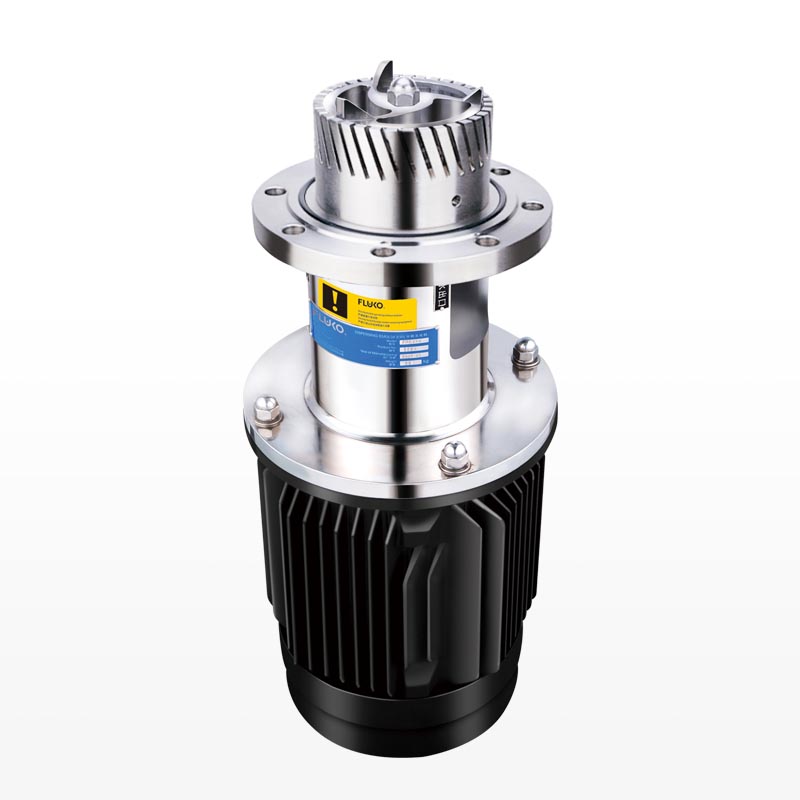
Field service data and supplier discussions at CPhI Worldwide show consistent patterns: inline homogenizers and rotor-stator systems require different inspection cadences than conventional impeller tanks, and lifecycle cost is driven most by seal life and spare-parts lead time. My recommendations draw on service records and published technical comparisons, plus guided trials with homogenizer equipment that demonstrate predictable particle-size drift when maintenance is deferred. These points reflect hands-on maintenance cycles and industry-acknowledged findings rather than marketing claims.
Practical checks and a problem-focused maintenance checklist
Start with targeted, verifiable checks: monitor bearing temperatures and motor current for step changes, measure batch particle-size distribution samples after an agreed run length, inspect seals visually for early extrusion, and log any abnormal vibration. Use formula-specific triggers—if viscosity or solid load increases beyond a threshold, advance the inspection. Keep a two-tier spare-parts stock: critical rotating seals and bearings on-site, less critical items in rapid-access inventory. Document each corrective action so recurring causes become visible in the audit trail.
Common pitfalls and how to avoid them
Avoid these recurring mistakes: 1) basing overhaul intervals solely on run-hours without accounting for formulation stress; 2) retrofitting higher shear components without validating thermal impact; 3) delaying procurement of critical spares until failure. Each increases total downtime. Validate retrofits with short controlled runs and particle-size checks, and treat preventive exchanges for seals as low-cost insurance when lead times are long.
Evaluating alternatives quickly
When teams consider replacements or upgrades, compare inline homogenizers, rotor-stator high shear mixers and traditional impeller systems on four measurable axes: particle-size control, thermal footprint, maintenance frequency and spare-parts lead time. Inline homogenizers often give tighter control but can raise maintenance frequency on seals; rotor-stator mixers simplify batch cleanup but may not reach the same fine dispersion without multiple passes. Match the technology to the product requirement, not the vendor pitch.
Closing synthesis
Addressing maintenance and lifecycle problems means shifting from time-based assumptions to condition-based triggers, documenting failures for root-cause clarity, and aligning spare-part strategy with supplier lead times. Those steps reduce repeat incidents and inform better equipment choices, whether that leads you to an inline homogenizer, a rotor-stator solution or an upgraded high-shear line from FLUKO.