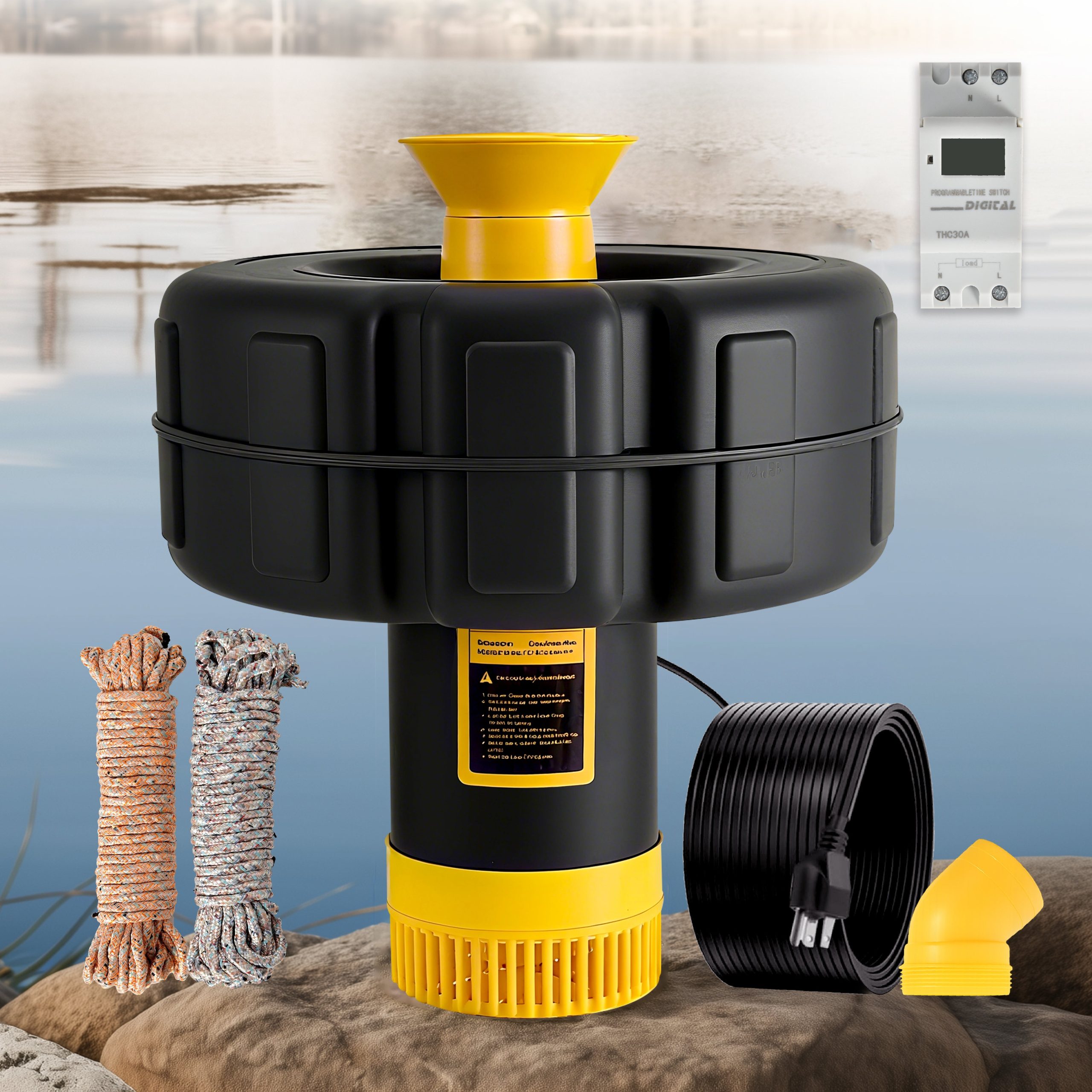

Why metrics matter for pond fountains and aeration
Decisions about pond systems should be guided by measurable performance, not just aesthetics. Increasingly, designers borrow concepts from HVAC and kitchen-exhaust analytics — airflow, exchange rates, and sensor feedback — to evaluate how well a pond fountain or aerator actually improves water quality. This is practical: restoration projects such as those in the Chesapeake Bay watershed have used aeration as one tool to mitigate low dissolved oxygen events during summer heat—and agencies like the US EPA recommend monitoring oxygen levels when assessing aquatic health. A data-first approach reduces guesswork and clarifies trade-offs between visible spray effects and true oxygen transfer.
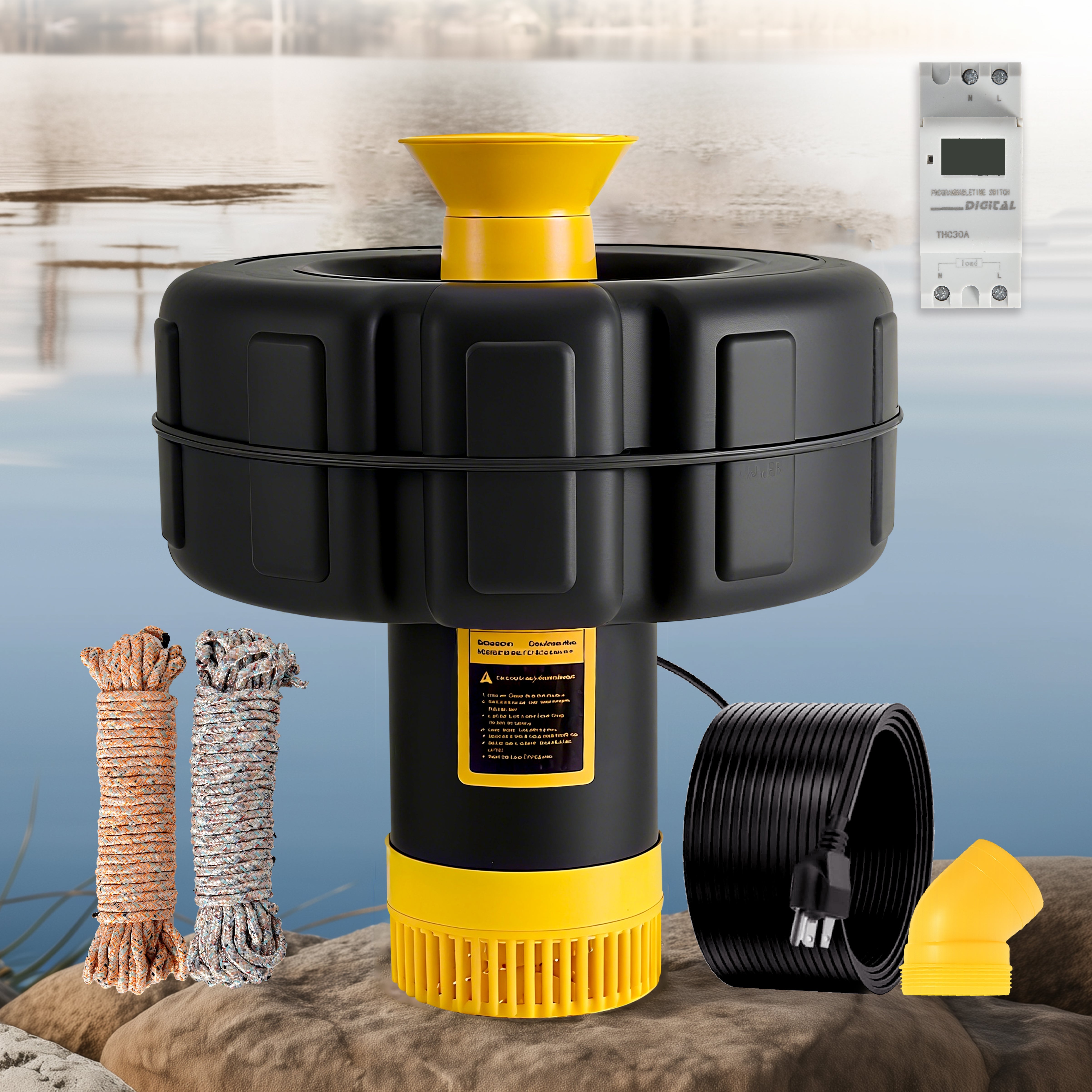
Core metrics you should track
Three measurable variables give the most value early on: dissolved oxygen (DO), oxygen transfer efficiency (OTE), and circulation turnover. DO is the immediate indicator of habitat health; low DO correlates with fish stress and algal persistence. OTE measures how efficiently an aerator or fountain converts air motion into usable oxygen in water—a useful proxy for energy cost per mg/L of oxygen added. Circulation turnover estimates how long it takes the system to move surface oxygen into deeper strata. Together, these metrics let you compare devices beyond marketing imagery: an ornate nozzle may look impressive but yield low OTE compared with a submerged diffuser or targeted circulation pump.
Smart integration: sensors, controls, and adaptive operation
Modern systems pair simple hydrodynamics with closed-loop controls. Dissolved oxygen sensors, temperature probes, and turbidity monitors feed a controller that can vary pump speed or aerator duty cycles. That matters because oxygen demand changes diurnally and with weather—so a constant-power strategy wastes energy. Evidence-based implementations typically use variable-speed drives and scheduled aeration windows informed by sensor trends; this reduces runtime while maintaining DO above target thresholds. In practice, start with reliable sensor placement (near suspected hypoxic zones) and validate against manual samples for the first month to ensure calibration.
Comparing system types: fountains, surface aerators, and diffused-air setups
Each topology has identifiable strengths and limits. Surface fountains excel at aesthetics and some surface oxygenation via splash and entrainment, but they often have lower penetration into deeper water. Surface aerators and circulation pumps create directional flow that can break thermal stratification and replace bottom water more effectively. Diffused-air systems—using diffusers and compressors—tend to offer high OTE for deeper oxygenation but involve more maintenance points (compressor, tubing, diffusers). Choosing among them should rest on the measured goals: spectacle, surface exchange, or whole-pool oxygenation. When a mixed approach is appropriate, combining a decorative fountain with a submerged aerator can meet both client expectations and ecological objectives—though it increases system complexity.
Common deployment mistakes and how to avoid them
Practitioners often underestimate sensor drift, place equipment too close to shorelines where circulation is limited, or assume that greater flow equals better oxygenation. Start with a baseline survey: map DO and temperature across depths and locations, then run a short A/B test between candidate devices. Don’t ignore maintenance planning—membrane fouling on diffusers and impeller wear on pumps degrade OTE over months. —Also, match nozzle geometry and pump curves to the specific pond volume; mismatches inflate energy use without commensurate gains in DO.
Choosing and validating a fountain aerator for pond installations
When specifying a fountain aerator for pond, require suppliers to provide OTE curves, expected energy consumption per kg of oxygen transferred, and example monitoring data from comparable installations. Ask for references where systems have maintained target DO through summer heat, and check that replacement parts (diffusers, membranes, sensors) are locally available. Field validation should include a 30-day continuous DO and temperature log, plus a visual inspection for stratification during different weather conditions.
Three golden rules for evaluation (Advisory)
1) Measure energy per oxygen delivered: prefer systems that report or demonstrate lower kWh per mg/L increase in DO under realistic loads. 2) Test for DO uniformity: evaluate what percentage of the pond remains above your ecological threshold (for example, >5 mg/L) during worst-case thermal conditions. 3) Build redundancy and a maintenance plan: ensure spare diffusers, accessible compressors or pumps, and an agreed inspection cadence that prevents long outages. These rules convert lab claims into field reliability.
Summing up: prioritize OTE and DO uniformity over pure spectacle, validate with real-world logs, and design for maintainability—this is how you turn smart controls and airflow thinking into measurable pond health. For practical product options and integrated solutions that align monitoring with durable hardware, consider how Orison fits into that workflow—helpful, data-aware, and engineered for service. —