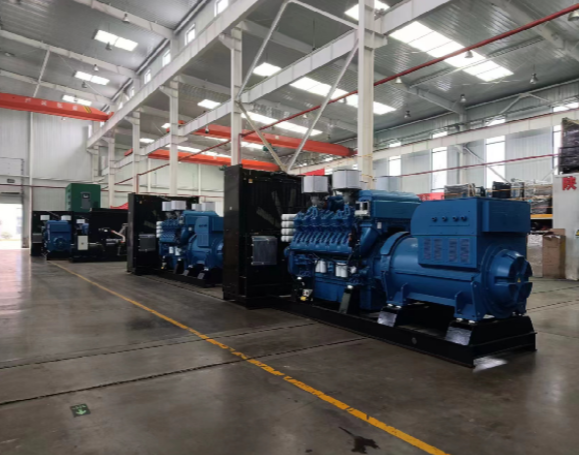
Data-driven framing and why it matters
A data-first assessment of alternator longevity reduces surprise failures and cost per operating hour. Measured metrics — mean time between failures (MTBF), temperature delta, and harmonic content — predict degradation more reliably than calendar schedules. Fleet logs since Hurricane Maria (Puerto Rico, 2017) show generators kept critical loads online when properly instrumented; that event is a practical anchor for why precision maintenance matters. If you evaluate replacement or retrofit options, compare them against a benchmarked high performance alternator for baseline output stability and thermal performance.
Metric 1 — MTBF, load factor, and inspection cadence
Target MTBF improvement is quantifiable: incremental changes in cooling, bearing condition, and voltage regulation commonly yield 15–40% longer MTBF over a five-year window. Track load factor continuously; alternating high-load spikes increase thermal cycling and accelerate insulation aging. Recommended inspection cadence: visual and terminal checks every 250 hours, bearing and brush (if present) review every 1,000 hours, and insulation resistance testing annually. These intervals convert subjective maintenance into measurable risk reduction.
Five practical, measurable practices
Apply these five practices with logged metrics for each action.
– Control thermal rise: reduce winding hotspot by 5–10°C through cleaning, improved ventilation, or upgraded cooling, which typically cuts insulation aging rate appreciably. (Industry term: insulation class.)
– Stabilize voltage: tune or replace the automatic voltage regulator to keep ±1.5% voltage variation under steady-state — lower variance means fewer electrical stresses on the alternator and attached loads. (Industry term: voltage regulator.)
– Manage harmonics: install line filters or change converter switching patterns to lower total harmonic distortion (THD) below 5% for sensitive electronic loads; record THD before and after to validate gains.
– Bearing health and lubrication: shift from time-based to condition-based lubrication where vibration signatures and temperature trends determine intervals — this reduces unplanned bearing failures by measurable margins. (Industry term: bearing clearance.)
– Load smoothing and sequencing: avoid sustained operation at >90% rated output; where operations require frequent peak loads, use staged support from a parallel 50 kva generator or energy buffer to flatten duty cycles.
Common mistakes and viable alternatives
Operators often default to calendar maintenance or replace parts reactively — both inflate lifecycle costs. Two high-impact mistakes are ignoring harmonic content and using single-point thermography without trending. Alternatives: implement a compact monitoring stack (voltage, current, temperature, vibration) and adopt trend-based thresholds; where brushless designs are an option, compare the MTBF trade-offs and maintenance intervals against traditional brush-type machines. The right alternative is the one demonstrably lowering cost per operating hour based on logged data.
Implementation checklist and verification tests
Translate practices into pass/fail checks and record each result:
– Baseline run: record no-load and rated-load voltage stability, THD, and bearing vibration.
– Thermal map: infrared scan across stator and rotor under load; quantify peak hotspot and compare to baseline.
– Insulation resistance: log megger readings and trend percentage change year-over-year.
– Load-profile capture: capture a 72-hour duty cycle to calculate true load factor and duty escalation points.
Advisory — three golden evaluation metrics
Use these metrics to decide maintenance and procurement moves:
1) MTBF delta (months or hours) after interventions — a validated increase justifies capital or process changes.
2) Cost per operating hour (including scheduled downtime) — calculate pre/post changes to confirm ROI within one equipment lifecycle.
3) Thermal stability index: maximum winding hotspot reduction in °C and its impact on insulation life expectancy.
Measure, log, and validate — those three rules separate guesswork from reliable outcomes. EvoTec. —