
A Quiet Room, A Loud Light: What’s Really Going On
Let’s keep it real: you sit down, tap the lamp, and boom—too bright, too fast. Table lamp companies see this complaint every day in support queues, and it ain’t just you (happens in dorms, studios, and home offices alike). Many folks think the fix is buying a new bulb, but the deeper issue is how your lamp handles steps in brightness and the way its driver talks to the switch. If you’ve tried a 3 way dimmable table lamp and still get jumpy light at low levels, you’re feeling a design gap, not user error. Customer feedback, return logs, and bench tests all point to the same tension: smoothness versus cost. So here’s the question—why do some lamps glide from night-light to task mode, while others stutter at 10% and hum like an old fridge?
Look, it’s simpler than you think—and more technical than it seems. Old-school lamps rely on fixed steps or blunt control, while newer lamps use smarter power converters and PWM drivers to shape the dimming curve. Yet even those can stumble if the triac dimmer on your wall isn’t in sync, or if the color temperature shifts weird at low current. The data is there in engineering tear-downs, and users feel it every evening. We’re about to compare how makers try to balance cost, silence, and true low-lumen stability. Stay with me—because the gap between “fine” and “finally right” is smaller than folks think, but it matters.
Where Traditional Dimming Trips Up
Why do 3-way lamps still flicker?
Here’s the technical core: legacy “3-way” designs often split brightness into hard steps. That means the internal driver toggles presets, not a smooth curve. At low levels, tiny changes in voltage make big changes in perceived light, and the lamp can buzz due to EMI in the circuit path—funny how that works, right? Triac dimmers cut part of the AC waveform, and cheaper drivers don’t read that signal cleanly. Result: flicker bands, hot housings, or a lamp that refuses to hit that soft-glow zone. Add in inconsistent bulbs, mixed color temperature, and no thermal guardrails, and you get a lamp that looks great on paper but twitches in real life.
What users don’t see is the handshake between the controller and the LED array. Without good current regulation, the PWM driver stabilizes late. Without an EMI filter, noise bleeds into the line. Without a tuned dimming curve, the jump from 20% to 10% feels like a cliff. And if the power path skips quality components—rectifier, smoothing cap, protection IC—the lamp struggles when voltage sags. Edge computing nodes sound fancy, but even a tiny MCU can manage low-end trim, startup ramp, and safe shutdown. When that logic is missing, a “3-way” becomes three awkward moods instead of a range.
New Principles, Smoother Nights
What’s Next
Forward-looking lamp designs treat dimming like a conversation, not a command. They read incoming signals, map them to a custom curve, and hold steady current across the LED string. That means smarter power converters, low-noise PWM, and a driver that knows how to coast through the bottom 15% without shimmer. Some makers now add microcontrollers that act like tiny edge computing nodes inside the base—local brains that learn your patterns, adjust ramp speed, and even guard against line noise from old wall dimmers. In practice, it feels simple: turn the knob, and the light flows. No steps. No hum. No drama.
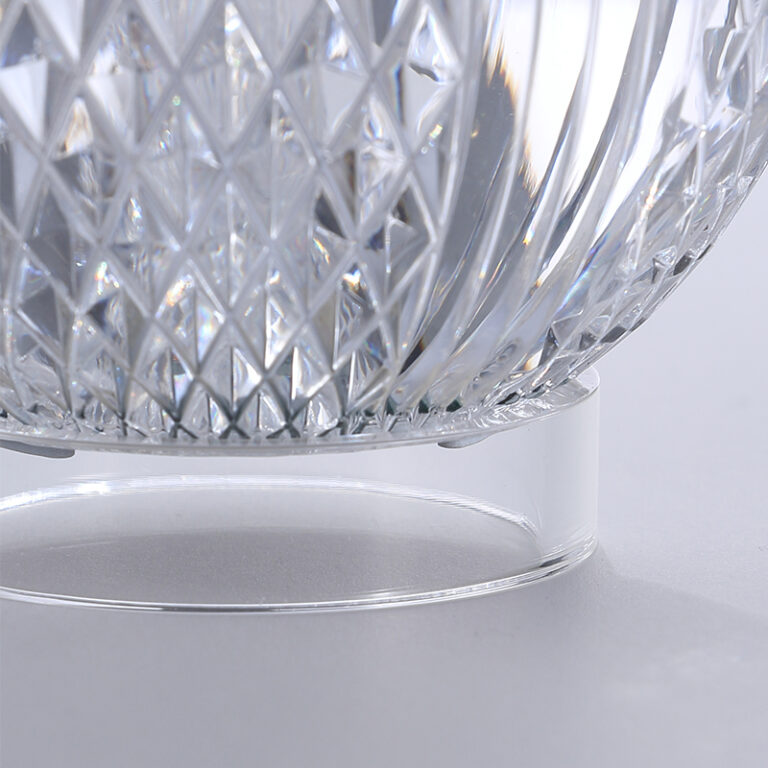
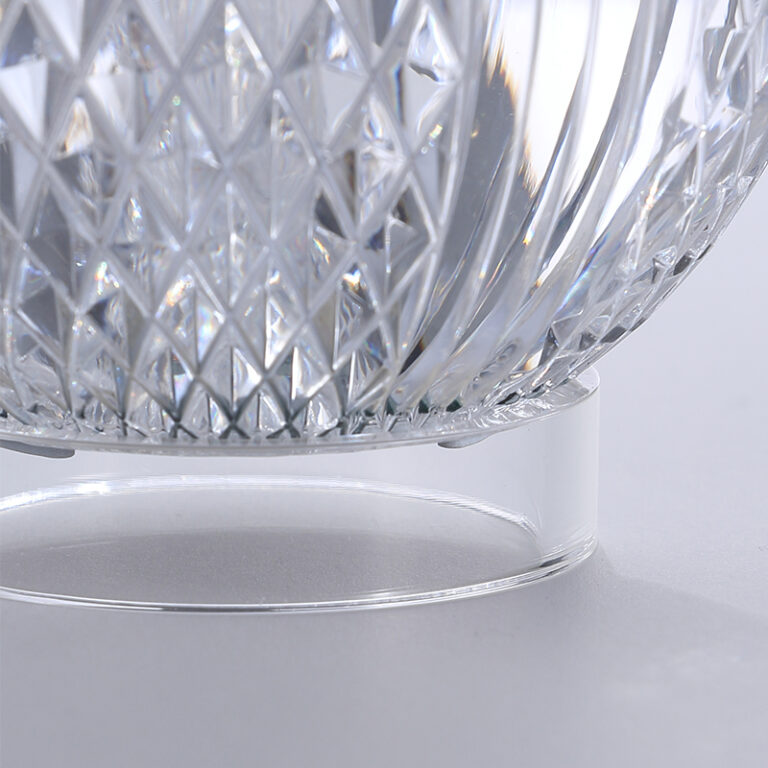
Take the faceted designs many people love, like a crystal diamond table lamp. It doesn’t just need bright sparkle; it needs low-level stability so those cuts don’t throw harsh glare when you dim down. That’s where improved thermal paths, EMI filters, and precise current control pay off. The future outlook? More hybrid drivers that blend linear regulation at the bottom with PWM at higher loads, and auto-calibration that senses the line, not just the knob. Semi-formal truth: the best lamps will hide the complexity and give you quiet power. Small chips, smarter curves, cleaner light—because mood should not fight the room.
How to Choose: Three Metrics That Actually Matter
Let’s wrap with what you can measure, not just vibe. First, low-end stability: test if the lamp holds a smooth glow below 15% with no visible flicker or buzz. Second, driver quality: look for mention of PWM driver design, EMI filtering, and thermal protection—signals that the power path won’t crumble under real use. Third, dimming curve control: check if it supports fine ramping, not just three hard steps, and plays nice with common triac dimmers. If a 3 way dimmable table lamp hits these marks, you’ll feel it the first week—less strain, better task focus, and a room that breathes with you. The lesson is simple but deep: smooth light comes from smart engineering. Choose the curve, not the claim. And if you need a place to start learning what makers are doing behind the scenes, keep an eye on brands like kinglong.