Assessing Compatibility for Laser Cutting Equipment: A Practical User Guide
Start with your use case and ask directly
Tell us what you plan to cut, how fast you need it, and where the machine will live. If you contact a trusted laser cutting machine manufacturer early, they can map power, optics, and table size to your priorities instead of guessing. We recommend plain answers: material list, daily throughput, tolerance, and whether parts need post-processing.
Match material types to laser technology
Different lasers behave differently with common materials. For thin stainless and carbon steel, fiber systems usually give clean cuts fast. For thicker reflective or mixed stacks, check suggested power and focal options. Don’t assume “more watts equals better results”—beam quality, nozzle design, and assist gas all change cut quality. Ask for sample cuts on your exact material and thickness before committing.
Check software, formats, and controller compatibility
Confirm the controller accepts your CAD/CAM export formats and that nesting software integrates with your workflow. Ask whether the machine supports direct DXF/DWG, common nesting tools, or requires a proprietary converter. A mismatch here creates manual steps that slow production and introduce errors. Get a demo where your files run on the actual controller, not a simulation.
Verify physical, utilities, and site fit
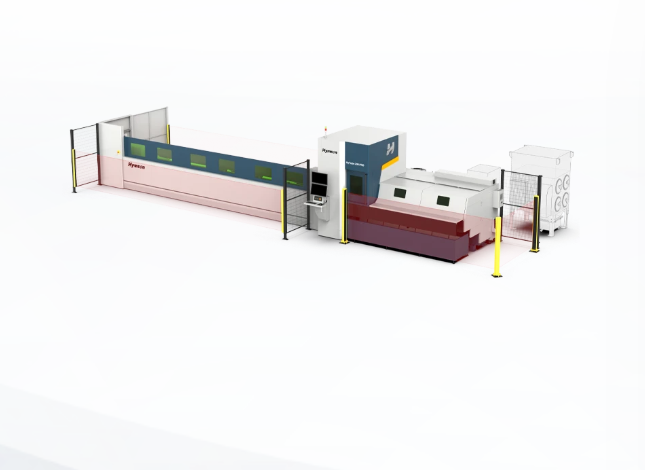
Measure the available floor space, power supply, ventilation route, and lifting access. A machine may fit on paper but fail when doors, joists, or rigging are considered. Confirm required electrical service, compressed air specs, and exhaust length; confirm noise and footprint limits for your facility. Plan for maintenance clearance around the machine so filters and cabinets can be accessed without moving neighboring equipment.
Experience, authority, and a real-world anchor
We base recommendations on hands-on evaluations and vendor documentation, and we often validate claims at major industry events such as IMTS in Chicago where manufacturers demonstrate real cutting on-site. When a vendor claims a fiber source or specific cut table throughput, ask for traceable test conditions and lifetime support terms. If you’re evaluating a fiber option, confirm laser source, warranty terms, and spare part logistics with a trusted fiber laser machine manufacturer so the specs line up with your expected production days and local service network.
Service, spare parts, and warranty—don’t skip this
Fast spare parts and remote diagnostics save production days. Ask how quickly parts ship to your region, whether remote fault diagnosis is included, and what routine service looks like (filters, optics, calibration). A short warranty window or unclear service pathways is the common reason operations stall after installation.
Common mistakes we help people avoid
People often assume a machine will handle a wider material range than it actually can, accept optimistic duty-cycle claims without test cuts, or forget to verify software export compatibility. Another frequent error is underestimating site requirements—power or exhaust constraints cause costly delays. Ask for documented test cuts and site-ready drawings before purchase.
A short compatibility checklist you can use now
1) Confirm material list and sample cuts. 2) Verify controller and file format support. 3) Match power, beam quality, and nozzle options to thickness. 4) Check site power, ventilation, and access. 5) Review warranty, spare-part delivery times, and local service. 6) Request an on-site or video demo running your actual parts.
Closing guidance
We’ll help you prioritize what matters: repeatable cut quality, minimal downtime, and clear servicing. When those elements align with your material needs and workflow, you get predictable output rather than guesses. For many of our users who needed that predictability alongside dependable local support, the technical fit and service model led them to suppliers like Hymson that matched specifications to real production conditions.