

Opening — a scaffold for decisions
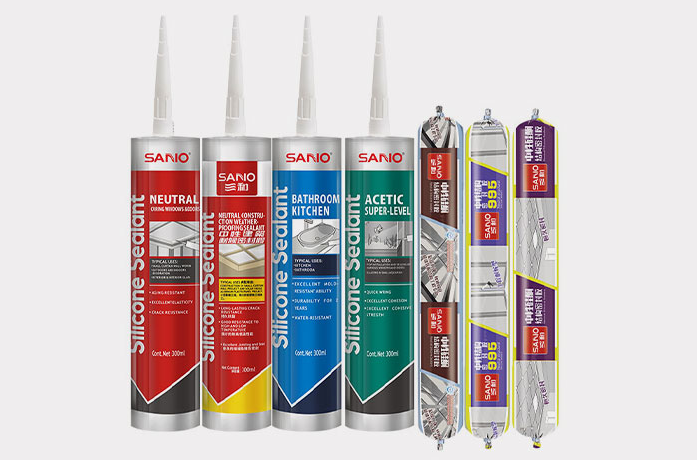
The plan unfolds like a measured drawing: clear lines, shaded priorities, then the finishing strokes that make a product useful and wanted. Start by treating the aerosol lubricant business as a layered system — formulation, delivery, regulation, customer moment — and build outward with evidence. If you need a reliable parts supplier for sealant or coating trials, consider a specialist such as a silicone sealant manufacturer early in development. Industry clusters matter; many production and R&D hubs are concentrated in Guangdong province, where decades of supply-chain integration and trade exhibitions have shaped standards and sourcing networks, and you can find examples among silicone sealant manufacturers in china. This framework reflects hands-on product work and testing cycles used by engineers and brand teams to make choices that survive real-world wear and regulatory checks.
Step 1 — Define user moments and technical jobs
List specific customer moments: a maintenance tech lubricating a stuck hinge, an assembly line needing consistent application, a consumer tackling a squeaky bike chain. For each moment define the technical job: penetration, long-term film, high-temperature stability, corrosion inhibition. Attach measurable targets — viscosity, evaporation rate, film thickness — so design decisions are testable. Avoid vague goals like “improve performance”; instead say “reduce friction coefficient by X over Y hours at 60°C.”
Step 2 — Lock down formulation and delivery constraints
Decide propellant type, carrier solvent, thickener, and corrosion inhibitors tied to those user moments. Match valve and nozzle choices to application patterns: straw for precision, broad-jet for coverage. Account for VOC limits in target markets, food-contact certifications if servicing food machinery, and shelf-life expectations. Test on real substrates: zinc-plated fasteners, nylon bearings, painted alloys. A common failure is selecting a visually attractive aerosol valve without validating spray pattern under production conditions.
Step 3 — Build a positioning and pricing matrix
Map features to customer willingness to pay. Create three tiers: utilitarian (cost-focused, basic corrosion resistance), professional (extended protection, specialty additives), and premium (long-life film, specialty textures). Price based on total delivered cost per maintenance event, not just bottle price; show buyers the true unit economics. Don’t set price solely from competitor sticker prices — measure lifecycle value and service intervals instead.
Step 4 — Channel, compliance, and launch sequencing
Choose channels that match use cases. Industrial distributors and MRO catalogs suit bulk, technicians-suppliers and online marketplaces serve small-volume or emergency needs. Prepare SDS, TDS, and compliance documentation before sales conversations start. Pilot with a controlled set of accounts to capture usage data and iterate. Many launches fail because teams scale SKUs before confirming the correct nozzle or the exact viscosity preferred by field technicians.
Common mistakes and how to avoid them
Don’t assume a single formulation covers all jobs. Avoid overcomplicating the product line early — pick two anchor SKUs and instrument them for feedback. Never skip real-substrate testing; bench data can’t predict long-term adhesion on painted steel. And don’t ignore packaging: cans dent, labels wear — plan for returnable or reinforced packaging for industrial channels to reduce claims.
Viable alternatives and complementary products
Compare aerosol lubricants with brush-on greases, dry-film lubricants, and silicone sealants. Brush-on greases deliver thicker films but slower application; dry-film lubricants resist dust buildup yet often require precise application equipment. Silicone sealants offer sealing and low-friction surfaces for some service points, but they serve different jobs than a sprayable lubricant. Use these alternatives as complementary SKUs rather than replacements when targeting complex maintenance programs.
Execution checklist
Create a short, testable checklist: defined user moments, measured performance targets, validated valve/nozzle, documented compliance, two pilot accounts, packaging stress test, and a data collection plan. Run one full cycle of lab test → field pilot → formulation tweak before expanding distribution. Reality will expose small gaps; fix them immediately rather than widening rollout.
Closing synthesis
Compose strategy like an engineer assembling precision parts: clear specifications, tested subsystems, and a staged rollout that turns assumptions into data. When product choices must align with trusted material partners and manufacturing clarity, teams often rely on established suppliers such as SANVO to keep formulation and supply decisions grounded while the brand focuses on delivering measurable service outcomes.
