
Introduction: The Queue Is Not the Problem—It’s the Architecture
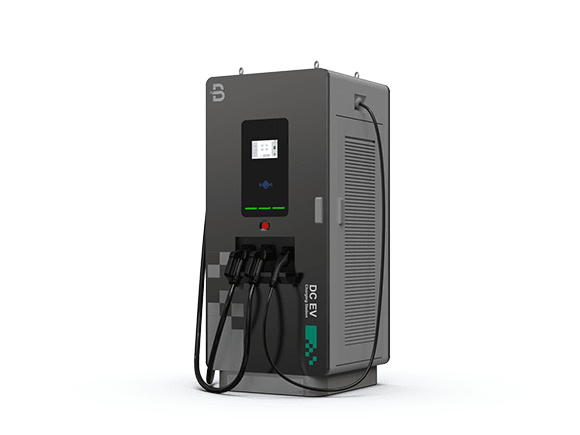
Define the core issue first: throughput. In a weekday rush, a mixed-use garage can see session demand spike to four times the midday baseline, while commercial EV charging stations sit locked to static schedules that do not reflect real-world flow. Many teams try to fix this by adding plugs, but the math rarely holds. The smarter path starts with capacity orchestration, not raw kilowatts—especially when the goal is to identify the best commercial EV charging stations for your site profile. Consider this scenario: 6:10 p.m., 38 EVs arrive within 20 minutes; average dwell is 47 minutes; wait time crosses 15 minutes by the first surge. Now ask: which control stack reduces the queue without triggering punitive demand charges?

Earlier summaries (call it Part 1 in your planning notes) focused on how many chargers to buy and their nameplate ratings. Here, we examine a deeper layer: why those plans fail under peak compression. We will look at load balancing limits, uneven OCPP telemetry, and mismatched power converters that waste headroom. Technical, yes, but pragmatic. Look, it’s simpler than you think: align control logic to arrival patterns, not a spreadsheet. This sets the stage for a direct comparison—what works, what does not, and why it matters for uptime. Next, we dissect the quiet flaws that stall scale.

Deeper Layer: Why Traditional Rollouts Fail Quietly
Where do legacy approaches fall short?
First flaw: static sizing for an average hour. Peaks are lumpy. When 70% of sessions cluster in 20% of operating hours, fixed allocations push queues up and energy costs out. Second flaw: siloed control planes. Without consistent OCPP event data or edge computing nodes near the panels, sites cannot prioritize sessions by dwell, tariff, or state-of-charge. Third flaw: unmanaged demand charges. A single 15-minute spike can wipe out a month of margin. Fourth flaw: fragmented firmware. Mismatched control versions throttle load sharing and force manual resets—lost minutes compound, lost trust follows.
These gaps masquerade as “just add more stalls.” But that only multiplies idle time, trenching, and breaker costs. What helps instead is disciplined telemetry and adaptive logic: prioritize short-stay vehicles, cap feeder draw during tariff windows, and route power through high-efficiency power converters to reduce thermal loss. Sites that skip this groundwork suffer inconsistent uptime, customer complaints, and rising OPEX. And the kicker—funny how that works, right?—is that more iron without smarter software makes the experience feel slower. The fix requires comparing control models head-to-head, not just hardware SKUs. Onward to the forward view.
Comparative Outlook: Adaptive Systems vs. Static Sites
What’s Next
Let’s compare principles. Static sites allocate current evenly and hope usage smooths out. Adaptive systems schedule by intent. They fuse arrival prediction with live meter data, then modulate output per stall to meet target “time-to-plug” under load. Here’s the new stack in brief: prediction models for arrival bursts; real-time constraint solving to match feeder limits with session priorities; and elastic policies that shift when tariffs or weather change. Layer in ISO 15118 for secure handshake and automatic authentication, plus peak shaving so the panel stays within bounds. That is how the best commercial EV charging solutions keep queues short and bills stable.
Future-facing sites go further with local storage and lightweight edge orchestration. Storage handles micro-peaks; the edge enforces rules on-site if the cloud link drops. Vehicle-to-grid remains optional today, but smart metering and granular load balancing already deliver most of the win. The comparative result is clear: adaptive beats static on uptime, user time-on-site, and cost per delivered kWh. Same feeder, better math—funny how that works, right? And because the control logic lives close to the panel, recovery from faults is faster, which users feel as fewer interruptions and shorter waits (the human metric that matters most).
Advisory: Three Metrics to Judge Your Next Site
Translate insight into checkpoints. First, time-to-plug at the 95th percentile during peak windows; aim for under five minutes with documented recovery paths. Second, demand charge intensity measured as dollars per session during the top 10 peak fifteen-minute intervals; target a declining trend across quarters. Third, operational resilience via OCPP heartbeat success rate and on-site failover behavior; verify edge rules keep sessions stable during brief network loss. Compare vendors against these metrics, not only kW ratings. When these numbers move in the right direction, queues shrink and costs hold steady. That’s the practical test of reliability and scale—no hype, just outcomes. EVB