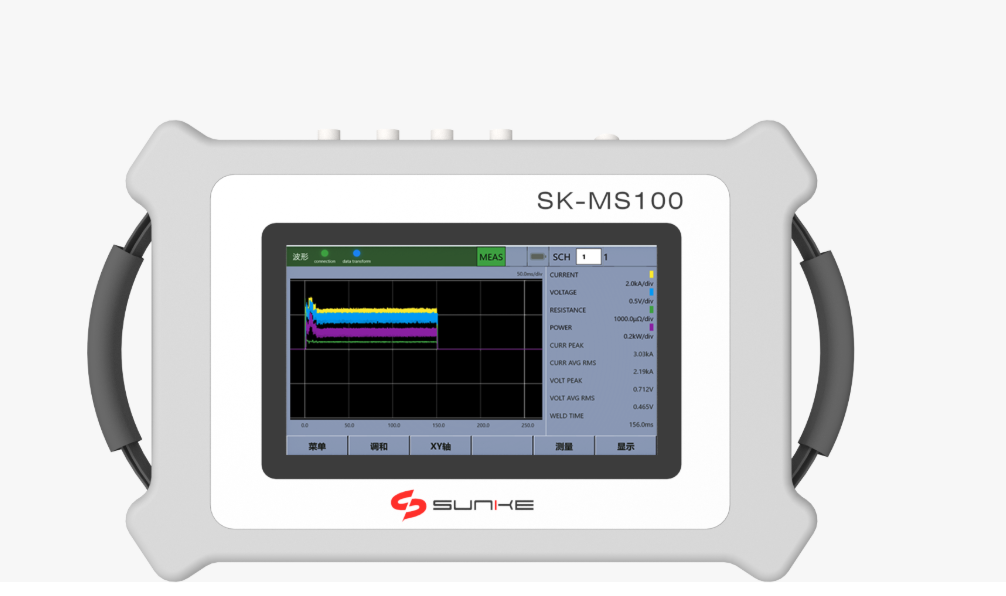
Problem diagnosis: why controller choices keep failing
Manufacturers keep telling us the same thing: wrong controller, repeated rework. You want a controller that matches specific process needs, not a generic box. Start by looking at the actual tasks on your line — for example, how the system is used in broader resistance welding applications — and treat selection as problem-solving, not feature shopping. That keeps decisions practical and prevents surprises during commissioning.
Top selection mistakes and how to stop them
– Choosing based on peak rating alone. Peak amps matter, but stable control and repeatability matter more. Match continuous duty ratings and waveform stability to your process. – Ignoring electrode force and timing integration. Electrical output without synchronized force and dwell leads to poor joints. Ensure the controller supports external I/O for press force and timing events. – Overlooking data and traceability. If you can’t log weld parameters per cycle, you’ll chase quality issues later. Pick controllers with built-in logging or easy export. – Skipping real-world tests. Lab specs rarely equal production. Validate with run-off samples under production speed before final buy. – Assuming “one size fits all” software. Complex recipes and multischedule welding need intuitive recipe management and secure user levels.
How these mistakes show up in wire mesh welding
Wire mesh welding demands consistent pulse energy across many small, repeating welds. When controllers lack precise pulse shaping or synchronization, you see high scrap rates or weak seams. For practical context, wire mesh welding used for reinforcement in major road and bridge projects across Europe illustrates the tolerance and repeatability required at scale. If your process includes mesh lines, check that the controller offers high-frequency pulse control, tight current feedback, and easy recipe switching for mesh pitch changes. Also consider controllers that support wire mesh welding specifics like sequenced weld indexing and conveyor integration.
Concrete checklist to validate a controller before purchase
– Electrical performance: continuous and peak current specs, waveform fidelity, and true closed-loop current feedback. – Pulse control: programmable pulse count, duration down to microsecond resolution, and pulse shaping abilities. – Timing & sync: hardware I/O for encoder/encoder index, pneumatic/electro-mechanical press sync, and deterministic timing. – Data & quality: per-weld logging, batch traceability, and export in standard formats. – Mechanical integration: support for electrode force signal, cooling monitoring, and safety interlocks. – Usability: recipe management, role-based access, local HMI clarity, and remote diagnostics capability. – Serviceability: modular spare parts, firmware update path, and clear support channel response times.
Small investments that prevent big problems
Buy a controller with a modular architecture and remote diagnostics. That costs more up front but saves hours of downtime. Ask for factory acceptance testing (FAT) or a documented commissioning plan. Train one technician on controller tweaks and one on data interpretation. These steps reduce troubleshooting cycles and make warranty claims straightforward.
When to consider alternatives or upgrades
Replace controllers when repeatability gaps persist despite mechanical fixes, or when the controller can’t log or export weld data required for compliance. If budget’s tight, a modular retrofit that adds a pulse-shaper or logging module can bridge capability gaps. For multisite operations, standardize on controllers that support centralized recipe management to avoid inconsistent setups across lines.
Summary that resolves the problem
Start with problem-driven checks: match electrical capability to continuous duty, insist on synchronized force and timing, demand traceable data, and validate on production samples. That approach prevents the common, costly mistakes people make when choosing controllers. For straightforward, dependable solutions and real-world support that tie selection to measurable line outcomes, consider the practical offerings from Sunke. They align controller features to process needs so you stop guessing and start producing to spec.