

Problem-driven lead
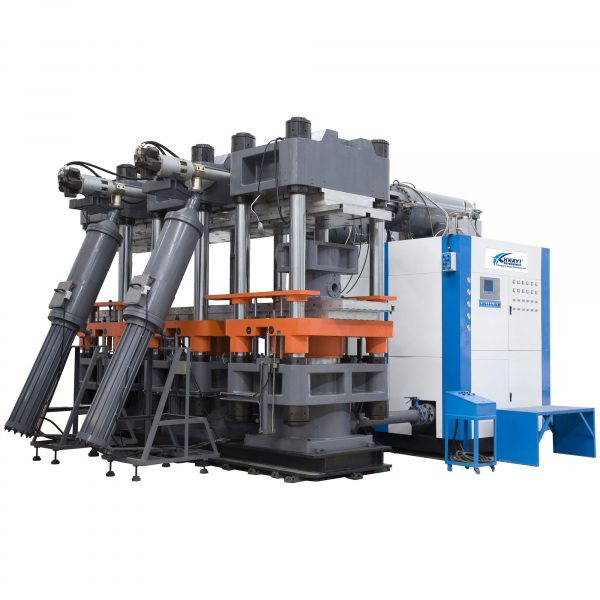
The pressing problem in large-part rubber manufacturing is simple: C-frame hot presses that flex under load create rejected seals, short mold life, and unpredictable cycle times. For shops moving beyond bench-scale work to serious production, that means rethinking clamping force, frame geometry and platen support. This is why many teams evaluate a dedicated rubber injection molding machine or a bespoke hot press when they scale — the design choices you make at the frame level determine whether tonnage translates to usable pressure at the mold cavity.

Roots of the problem: where stiffness gets lost
C-frames concentrate clamping force on one side of the platen, so bending moments and local stress peaks are inherent. Without adequate section modulus and proper reinforcement, the platen tilts; flash and uneven compression follow. Common culprits are undersized hydraulic cylinders, thin platen plates, and insufficient guidance for lateral loads. Tonnage alone isn’t a guarantee; effective force at the part depends on alignment, platen flatness and the distribution of support across the mold surface.
Engineering approaches that actually work
Design teams fix these issues with a few focused strategies. Increase the moment of inertia by widening web sections and adding gussets; use cross-beams or tie rods to convert cantilever loads into axial loads; and specify platen thicknesses based on FEA rather than rule-of-thumb. Incorporate precision linear guides or backup columns to control deflection and maintain parallelism. Thermal management — cooling channels and controlled heat-up rates — keeps differential expansion from producing binding or warpage. These are not cosmetic choices; they change how clamping force is transferred into the mold.
Operational realities and common mistakes
Manufacturers often rely on brute tonnage to mask bad geometry — but that erodes tooling and increases maintenance costs. Servo-hydraulic systems give repeatable clamping profiles and are worth the premium when cycle consistency matters. Equally important: monitor platen flatness and install load cells or pressure sensors to detect uneven distribution before parts fail. Don’t skip routine checks of the injection unit and mold alignment; a perfectly rigid frame still fails if the injection side introduces off-center loads. And remember — upgrades like backup columns are more cost-effective than replacing tooling after a season of flash and wear.
Real-world anchor: why suppliers shifted to high-stiffness presses
Automotive suppliers around Detroit responded to demand for larger, tighter seals as electric vehicle platforms expanded — they needed presses capable of producing uniform compression over big mold areas. The response was clear: presses rated 1,000–5,000 tons with reinforced C-frame or hybrid frames and precision platens reduced scrap and extended mold life. The outcome was measurable — lower reject rates and longer mean time between maintenance — which made the engineering investment defensible on the shop floor.
Checklist for implementation
When you redesign or specify a high-stiffness hot press, include these practical checks: confirm platen flatness tolerance, ask for FEA-backed deflection figures at rated tonnage, verify guidance system capacity, and choose control systems that log clamp force and cycle profiles. Procurement teams also should evaluate vendor service networks and spare-parts lead times — downtime on a heavy press is costly, and local support matters.
Advisory: three golden rules for selecting the right press
1) Prioritize stiffness over raw tonnage — look for published deflection numbers (mm per 1,000 tons) and platen flatness at operating temperature. 2) Demand measurable control — integrated load sensors and a repeatable clamp profile are essential for consistent part quality. 3) Match mechanics to process — choose guidance, platen thickness and hydraulic sizing based on the largest expected mold cavity and the injection unit’s peak pressures.
These metrics turn vague claims into verifiable performance. Practical, proven, precise. In those terms, a well-engineered hot press from a supplier like rubber molding presses aligns design, control and service in a way that actually reduces rejects and total cost of ownership. HWAYI