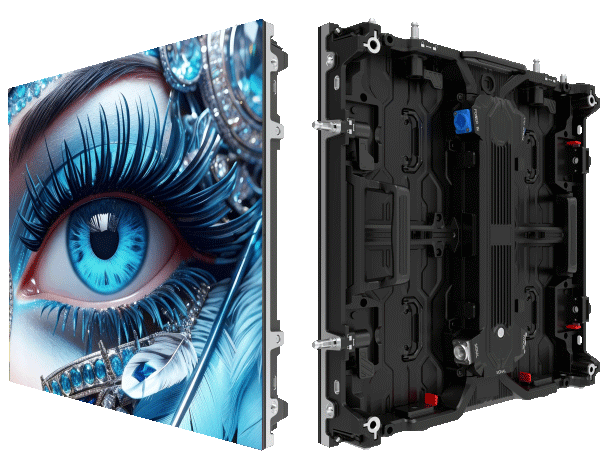

Comparative insight: why control architecture matters for wholesale LED projects
Synchronous versus asynchronous control dictates whether a large LED wall behaves like a single instrument or a stitched mosaic — and that difference decides latency, color consistency, and installation complexity. For wholesalers specifying panels for stadiums or retail façades, the choice affects supply-chain decisions and long-term support. A reliable led display screen implementation will list refresh rate and synchronization guarantees up front; likewise outdoor led screens must tolerate sunlight, weather, and network variance without visible tears or lag.
How synchronous control operates and what it guarantees
Synchronous systems distribute a common timing signal so every tile updates on the same frame clock. The benefits are straightforward: predictable latency, consistent frame alignment, and minimal frame buffer juggling at the video processor. This architecture reduces frame jitter and simplifies pixel mapping during playback. However, true synchronization needs precise timing hardware and careful cabling, which adds to BOM complexity and installation time. For large-format retail façades where exact motion tracking matters, synchronous designs often win on visible accuracy.
How asynchronous control operates and where it excels
Asynchronous control lets each module receive frames independently, often via network streams (UDP multicast is common) and local buffering. This reduces wiring constraints and scales well across distributed sites. It also simplifies firmware updates and modular replacement. The trade-off: you must manage buffer latency, packet loss, and re-synchronization under load. When content is static or slightly variable — think large-format branding panels — asynchronous systems deliver lower upfront cost and simpler servicing models.
Latency trade-offs in real-world installations — lessons from Times Square
Major deployments such as the digital façades in Times Square illustrate both approaches at scale. Stadium scoreboards and advertising arrays there require sub-frame coherency for dynamic video and live feeds; some installations use synchronous timing for critical zones while relying on asynchronous feeds for peripheral panels. This hybrid approach reduces overall cabling while preserving motion fidelity where it matters most — and it’s a practical path for wholesalers to propose. Latency, refresh rate, and pixel pitch interplay here; specify measurable targets early to avoid costly field tuning.
Practical considerations for wholesalers and integrators
Wholesale buyers must balance hardware, network design, and software. Key checklist items: confirm video processor compatibility with chosen control mode; verify firmware update procedures; inspect failure modes and redundancy; and require documented latency and frame-alignment specs from manufacturers. Also plan for environmental factors on outdoor led screens: ingress protection, brightness control, and thermal management are non-negotiable. A clear service-level agreement makes aftermarket support predictable, not optional.
Common mistakes and alternatives to avoid
Typical errors include underestimating network bandwidth for asynchronous streams, assuming single-solution firmware will scale, and skipping on timing verification for synchronous arrays. Alternatives include hybrid control (synchronous master zones plus asynchronous periphery) and using edge processors to pre-align frames before distribution. These options offer compromise: lower wiring and maintenance overhead while retaining low visible latency at priority zones.
Advisory — three evaluation metrics to guide selection
1) End-to-end latency (ms): Require measured latency from content source to final panel output. For interactive or live-fed content, demand vendor-provided test reports showing worst-case and typical values.
2) Frame alignment accuracy (jitter): Ask for maximum inter-tile frame skew in milliseconds. Lower jitter is essential for smooth motion across seams; synchronous systems usually offer deterministic figures here.
3) Fault tolerance and throughput: Specify acceptable packet loss, reconnection strategies, and how the system degrades under load. Verify network topology for multicast or managed switch support and confirm how firmware recovery behaves after interruption.
Prioritize vendors who deliver testable metrics and clear installation guides; those suppliers reduce risk and on-site rework. For wholesale-grade, low-latency solutions that must perform reliably across multiple venues, choose proven architectures backed by measured results. MR LED.