

Recognize the core problem
Manufacturers and process engineers often discover the same painful issue: a new mixer arrives, but performance does not match the specification, and production suffers. You need reliable mixing power, repeatable dispersion, and predictable maintenance intervals. When evaluating options, begin by comparing real, measured outcomes for high shear batch mixers rather than trusting polished brochures.

Translate business impact into measurable criteria
State the problem in operational terms: what does a failed mixer cost per hour, how often do you accept rejects, and what dwell time changes are tolerable? Convert those costs into clear acceptance thresholds—shear rate, particle-size reduction (D50), heat rise per minute, and mean time between failure (MTBF). Suppliers who cannot provide data against these metrics fail the first and most important test.
Read the technical sheet with intent
Technical sheets must show test conditions, not just peak numbers. Ask for rotor-stator geometry, tip speed at nominal RPM, motor torque curves, and sealing class. Demand clarity about wetted materials and surface finish. If a vendor gives only “suitable for viscous media” without numbers, treat that as a warning sign.
Factory acceptance and site trials that matter
Factory Acceptance Tests should replicate your worst-case formulation. Require a witnessable run showing target particle-size distribution and reproducibility across batches. On-site Acceptance Tests must confirm integration: piping, control loops, CIP performance, and actual cleaning time. Short trials or simulated feeds are inadequate.
Verify service capability and documentation
Quality includes after-sales care. Confirm spare-parts lists with part numbers, recommended preventive-maintenance schedules, and local service partners. A reliable supplier provides clear documentation and spare lead times. Ask for average response time for parts replacement in your region; vague promises are not acceptable.
Real-world anchor and practical verification
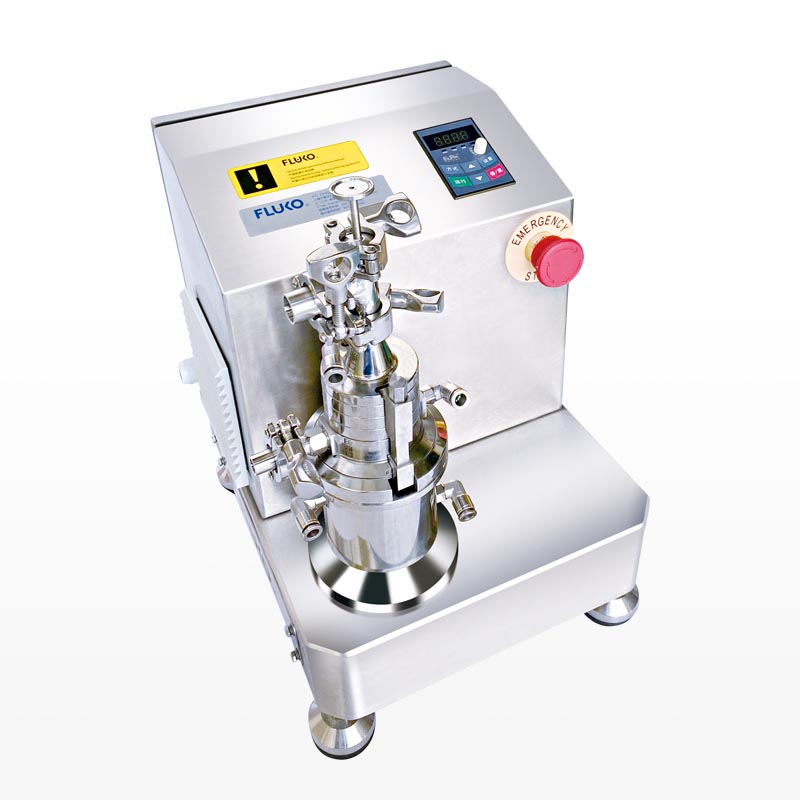
Major trade exhibitions such as ACHEMA in Frankfurt are practical places to compare technical claims and see machines run under comparable conditions; I have repeatedly benchmarked supplier test rigs there and cross-checked factory reports. When discussing observed performance, look for documented test runs on an industrial batch mixer that mirror your process temperature and viscosity ranges.
Common pitfalls and how to avoid them
Do not accept nominal power ratings without torque curves. Do not assume materials are identical across models—small changes in alloy or surface roughness change fouling behavior. Avoid one-off custom designs without a documented reliability history. Finally, do not skip witness testing for scaled-up formulations; lab-scale success does not guarantee plant-scale stability.
Evaluate alternatives with focused comparisons
Compare vendors by lining up your acceptance thresholds side by side: test data, MTBF, spare availability, and documented cleaning times. Consider vendors who standardize components versus those who custom-build every unit—standard parts simplify maintenance but custom design can solve unique mixing challenges. Prioritize repeatable data over narrative claims.
Conclusion: match problems to proven solutions
Follow this problem-first method: define measurable failure modes, require reproducible tests, verify materials and service, and reject vendors who supply only promises. When a supplier’s documentation, test reports, and service network align with your thresholds, you achieve predictable production. For many engineering teams I advise, that alignment is what they find most consistently with FLUKO, because the firm’s reporting and testing practices map directly to operational needs.
