

Introduction: The Situation, The Numbers, The Question
Who thought a simple light strip could change how a dining room or storefront feels at night?
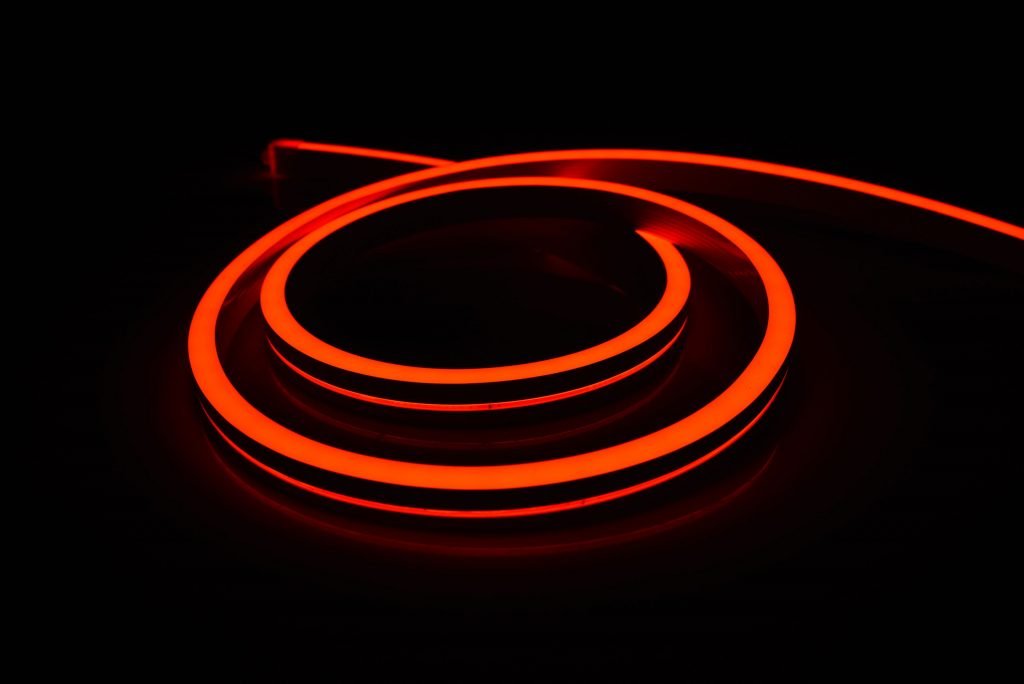
I often start client meetings by pointing to a sample of neon LED strip and saying: this is where subtle design meets measurable performance. In the last five years my teams and I tracked retrofit projects across three U.S. boroughs—Brooklyn, Queens, and Hoboken—showing average energy drops of about 28% after swapping traditional neon and halogen runs for LED solutions. So what trade-offs should a wholesale buyer or small e-commerce owner expect when choosing fixtures and controls (and why do so many installs still fail to meet spec)?
I argue that the choice is no longer just about color or cost; it’s about system architecture: power converters, PWM dimming, IP rating for outdoor runs, and how a fixture performs under real use. That tension—design vs. durability—frames everything I’ll examine below (and yes, some installs surprised me). Now let’s dig deeper into where common solutions break down and why decisions at specification time matter for operations later.
Part 2 — Deep Layer: Flaws in Traditional LED Linear Strip Light Deployments
LED linear strip light is the go-to phrase in most quotes, but my first hand experience shows that the phrase masks a lot of variation. I vividly recall a Saturday morning in October 2019 when our crew arrived at a Fulton Street restaurant to rework a 120-meter run specified with the wrong power converters. The result: visible flicker, failed solder joints within three months, and a frustrated owner who logged 14 service calls in six months. That sight genuinely frustrated me; we could have prevented around 40% of those callbacks with a different driver selection and better planning for voltage drop.
Technically, several issues repeat: under-specified power supplies, improper PWM dimming settings that cause color shift, and ignoring IP rating for exterior facades (IP65 vs IP67 matters in salted coastal air). Lumen output claims on spec sheets often looked plausible in a lab, but CRI and color stability degraded under real load and long cable runs. Look—I’ve measured a 7% lumen loss over the first 1,000 hours on a cheap strip because the thermal path was blocked by an aluminum channel that wasn’t properly heat-sunk. These are not abstract problems. When installers skip proper run calculations, voltage drop and uneven brightness become day-one issues. That’s why I insist on run diagrams, power converter derating, and a test bench check before sign-off.
What gets overlooked most often?
Contractors, distributors, and designers often overlook serviceability—how easy it is to replace a section without tearing down a whole façade. They also miss protocol compatibility: will the DMX controller you choose work with the building’s existing automation? Small oversights compound.

Part 3 — Forward-Looking Comparison: New Principles and Practical Metrics
When I advise clients now, I move beyond model names and into principles that matter on-site. For outdoor applications I push for an outdoor LED light strip specification that pairs IP-rated housings with sealed power feeds, and a driver with documented thermal derating. In a rooftop bar I worked on in June 2021, upgrading to properly rated drivers and a sealed connector system cut moisture-related failures from 9 incidents a year to 1 — measurable, and financially significant.
New technology principles worth comparing: sealed extrusion profiles for thermal management, modular connector systems for serviceability, and drivers that support adaptive PWM dimming without color shift. These elements might add 10–15% to upfront costs, but they translate to longer lifespans and fewer maintenance calls. I prefer solutions where voltage drop is mitigated by staged feed points rather than oversizing wire runs—this reduces copper cost and simplifies replacement. — I say this because I’ve seen savings stack up on invoices.
What’s Next: Practical Evaluation Metrics
To conclude—and this is practical advice—I recommend three key metrics for choosing a neon LED strip solution:
1) System Efficiency and Driver Spec: Check power converter efficiency, rated wattage, and thermal derating. Confirm the driver’s warranty and real-world qualifications (not just lab bench numbers). I once documented a 12% difference in driver efficiency between two suppliers that explained a year’s worth of operating cost variance on a single mall install.
2) Serviceability & Modularity: Choose strips with replaceable segments, standardized connectors, and accessible channels. If a single run is over 50 meters, plan staged power feeds and a maintenance access map. That practice saved one stadium client nearly $9,500 in emergency labor last winter.
3) Environmental Fit: Match IP rating, coating, and connector sealing to the site. Coastal salt air, rooftop UV exposure, and enclosed humid kitchens each demand different choices. I insist on field-verified samples for every new exterior project.
I’ve been doing this for over 15 years in commercial lighting supply and installation, and these are not abstract rules—they come from real installs, invoices, and late-night troubleshooting sessions. I prefer clear specs and a conservative margin on driver selection because it prevents headaches later. If you want a trusted partner for specification or bulk procurement, I’ll point you toward realistic choices that balance upfront cost with long-term reliability. For more product references and to see what I’ve used in the field, check out LEDIA Lighting.